Transitional (Baroque) Bows: History, Construction & Modern Use
Transitional bows — sometimes also called Transitional Baroque bows — bridge the gap between early clip-in Baroque bows and the fully developed Classical screw-frog bows.
They first appeared in the mid-18th century, during a time when both music and instruments were changing rapidly.
Understanding these bows helps us choose the right tool for repertoire by Bach, C.P.E. Bach, early Haydn, and even Mozart’s youthful works.
Construction Features of Transitional Baroque Bows
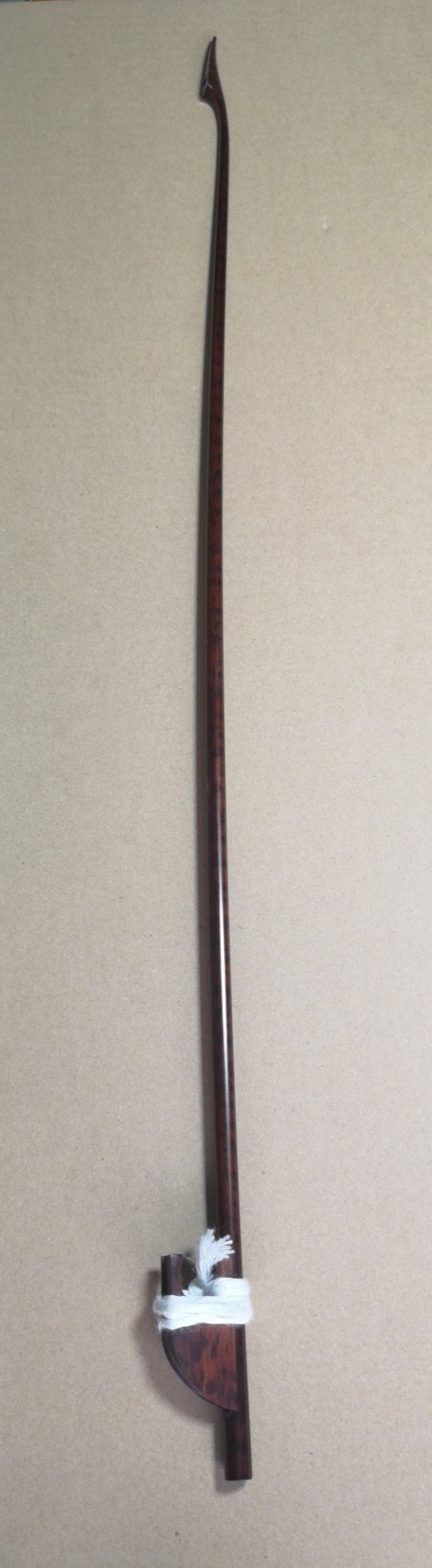
Stick curvature: Many transitional bows had an inward (concave) curve, which allowed greater hair tension and smoother legato.
Fact-check note : Not all transitional Baroque bows were concave. Some were straight or slightly outward-curved. The term “transitional” covers variation, not a single fixed design.
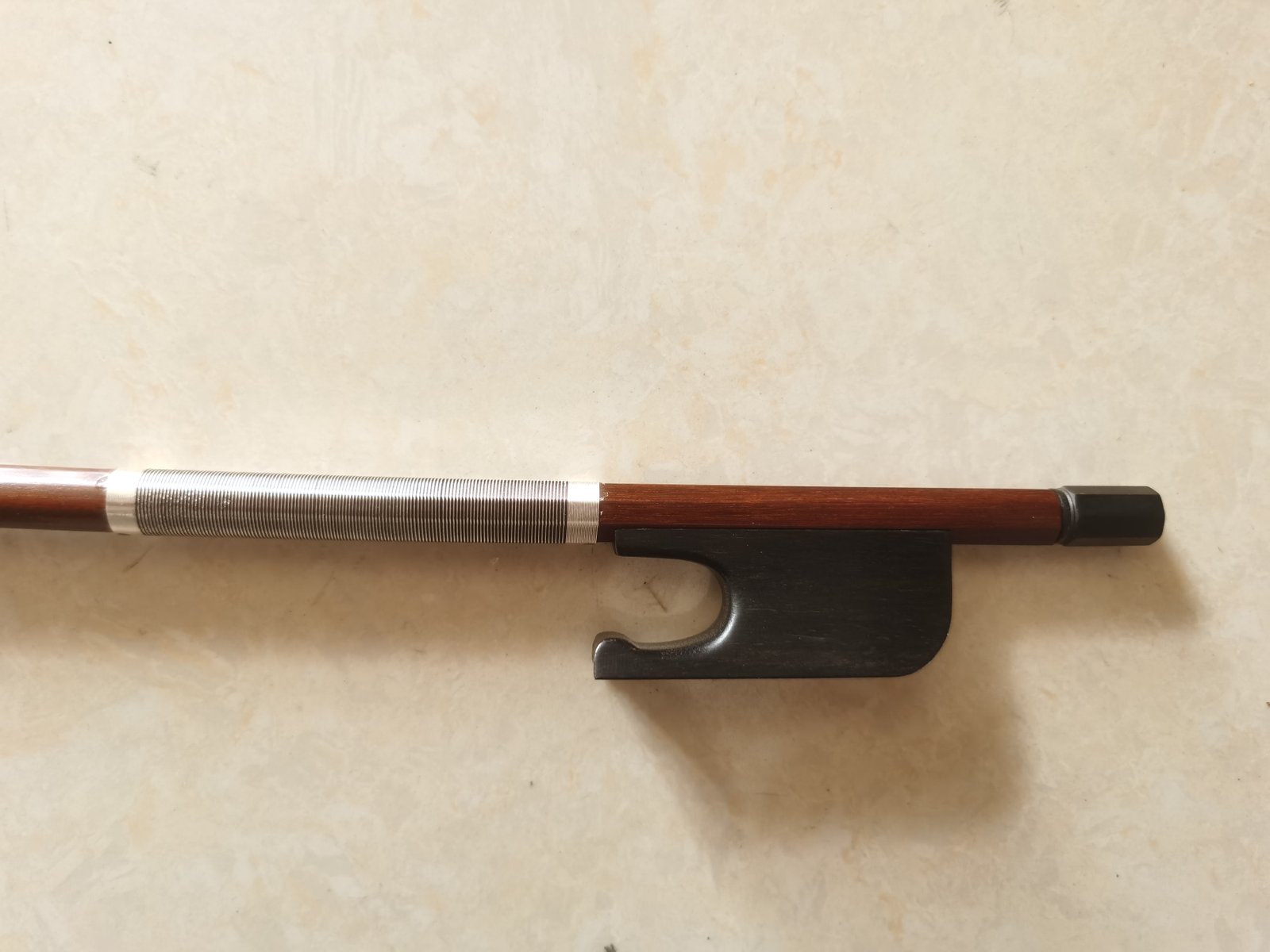
Frog mechanism: Some bows still used clip-in or slide-in frogs, while others introduced early screw mechanisms.
Length: Typically 65–70 cm for violin, longer than early Baroque bows.
Weight: Often 48–55 g for violin bows, heavier than clip-in bows but lighter than modern bows.
Materials: Snakewood was still common, but pernambuco gained favor for its elasticity and strength.
Playing Characteristics
Transitional bows are suited for both sharp Baroque articulation and smoother Classical phrasing.
They allow longer melodic lines with more sustained tone than early clip-in bows.
Their balance point is closer to modern bows, which makes them feel more familiar to today’s players.
These qualities make transitional bows ideal for mid-18th-century repertoire, combining Baroque clarity with emerging Classical lyricism.
Historical Context
Transitional bows appeared during a turning point in musical history. Composers such as C.P.E. Bach, early Haydn, and young Mozart required both dance-like clarity and longer, more lyrical phrasing.
Fact-check note (visible to readers): Surviving bows from this period show wide variation. Some scholars argue that the term “transitional” oversimplifies a diverse set of designs from different regions (France, Germany, Italy).
Mid-18th century (c. 1740–1780): Transitional bows gradually replaced clip-in bows in many courts and orchestras.
Late 18th century: The screw-frog bow became dominant, but transitional types still circulated, especially outside cultural centers.
Modern Use in Historically Informed Performance
Today, performers in historically informed performance use transitional bows to explore late Baroque and early Classical repertoire.
Modern makers craft replicas based on surviving examples, often adjusting stick curvature, weight, and balance to suit today’s string instruments.
Fact-check note: Modern reproductions are sometimes slightly longer or heavier than 18th-century originals, to suit today’s performance contexts.
Conclusion
The so-called transitional bows (or transitional Baroque bows) reveal how music and instrument design evolved together.
For today’s musicians, these bows are not only about historical authenticity — they also offer expressive possibilities that modern bows cannot fully reproduce.
Note to readers: Dimensions and weights mentioned here are approximate. Surviving bows vary widely, and modern replicas are often adapted for today’s instruments.